Understanding painting
About painting services in India
Painting is the most frequently repeated job in any building. A home gets rewired once in decades and re-plumbed rarely, but it gets repainted every few years — and each time, the result depends far more on preparation and workmanship than on which tin was opened. That is why two jobs using the same premium paint can look completely different after two monsoons.
The market reflects that. Rates range from a few rupees per square foot for a basic single-coat repaint to several times that for a full system with two putty coats, primer and a premium washable emulsion. Neither is wrong — they are different products. The problem is that quotes rarely say which one you are being offered, so homeowners end up comparing numbers that were never comparable.
What professional painting actually includes
A professional painting job is a layered system, not a coat of colour. Each layer has a job, and skipping one shows up later in a specific way.
- Surface preparation — scraping loose or chalky old paint, sanding, filling hairline cracks and patching damaged plaster. The least visible stage and the first to be cut when a price is squeezed.
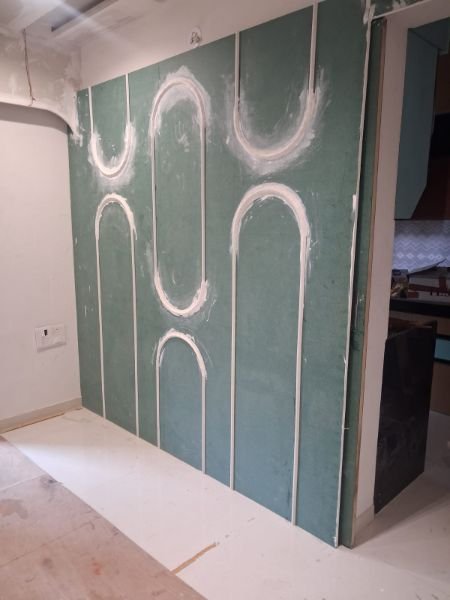
- Putty — one or two coats to level the wall, sanded between coats. Two coats are what produce that flat look under side light.
- Primer — the bonding and sealing layer between putty and paint. Skip it and colour absorbs unevenly and adhesion suffers.
- Finish coats — normally two. Deep reds, strong yellows and dark blues often need a third for uniform coverage.
- Protection and cleanup — covering furniture and floors, masking fittings, and removing dust afterwards. Sanding putty creates a lot of it.
Anything quoted without naming these stages is an incomplete quote, however attractive the per-square-foot number looks.
Painting for homes and for commercial spaces
Residential painting
Homes are painted around people. Rooms are done in sequence so the family can keep living there, which stretches the schedule but keeps disruption manageable. The priorities are a smooth, even finish, low odour where children or elderly people are present, and washable surfaces in kitchens, along staircases and anywhere hands touch walls.
Bathrooms and kitchens need moisture-resistant and anti-fungal lines rather than standard emulsion. Ceilings are worth doing even when walls look acceptable — a dull ceiling makes an entire room read as old.
Commercial and industrial painting
Commercial work is scheduled around business hours, often at night or over weekends, and is judged on durability and turnaround rather than finish alone. Corridors, receptions and stairwells take constant contact, so scrubbable finishes earn their higher cost quickly.
Industrial work is a different trade again. Protective coatings, anti-corrosive systems on structural steel, floor marking and heat- or chemical-resistant finishes are specified for the conditions they face, and surface preparation standards matter far more than colour.
Types of paint and finish
Finish decides both how a wall looks and how it survives being cleaned. The usual choices, from flattest to glossiest:
- Matt / flat — hides wall imperfections best, the softest look, but the hardest to scrub. Good for ceilings, bedrooms and low-traffic walls.
- Eggshell and satin — a slight sheen with reasonable washability. The practical middle choice for living areas and hallways.
- Semi-gloss and gloss — most durable and easiest to wipe, but shows every undulation in the wall. Usual choice for doors, trims, grills and kitchens.
- Texture finishes — roller and comb textures, stucco and plaster-style effects, metallic and pearl coats. Priced separately, normally one wall per room.
- Exterior emulsions — built for UV, rain and thermal movement. Interior paint used outside will not last a season.
- Enamel and PU — for wood and metal rather than masonry. Enamel gives opaque colour; PU and melamine keep wood grain visible.
The painting process, step by step
- Site visit and measurement. The contractor measures paintable area and inspects wall condition, damp patches and cracks. Ask for the measured area in writing at this stage — once walls are covered it cannot be verified.
- Quotation. A complete quote names the area, putty coats, primer, paint brand and line, number of finish coats, and what preparation is included.
- Protection. Furniture shifted to the room centre and covered, floors sheeted, fittings and switchboards masked.
- Preparation. Old loose paint scraped, cracks filled, plaster patched, surfaces sanded. Damp areas treated before anything else.
- Putty and sanding. One or two coats with sanding between and after. This is the dusty stage.
- Primer. Applied and left to dry properly before colour goes on.
- Finish coats. Usually two, with correct drying time between them. Rushing this is why some walls look patchy in raking light.
- Inspection and touch-up. Walk every room in daylight with the contractor before the team leaves — corners, wall-to-ceiling lines, behind doors and around switchboards are where rushed work shows.
- Cleanup and handover. Dust removal, fittings refitted, leftover material accounted for.
How to choose a painting contractor
Rate alone is a poor filter, because the cheapest quote is usually cheapest for a reason that only becomes visible later. A few things separate contractors who last from those who do not:
- They inspect before quoting rather than pricing over the phone.
- They state the measured area, and how they measured it.
- They name the paint line, not just the brand — the same company sells economy through premium at very different prices.
- They raise damp and cracks at quoting stage instead of discovering them as extras mid-job.
- They give a written workmanship warranty and a realistic schedule.
- They have reviews and completed work you can actually look at.
Before deciding, consider
- Whether the quote covers ceilings, or only walls.
- Whether furniture shifting and post-work cleanup are included.
- Who buys the paint, and who owns whatever is left over.
- How payment is staged — avoid paying most of it upfront.
- Whether the timeline assumes an empty home or an occupied one.
Understanding painting costs in India
Painting is normally quoted per square foot of paintable area, with material and labour included. Some contractors offer labour-only rates where you buy the paint — cheaper on paper, but you carry the risk of wrong quantities and there is no single party accountable for the finish.
What moves the number most, in order: how many putty coats, which paint line, whether the surface needs scraping back, and how much preparation the walls need. City and access matter too — upper-floor exterior work needs scaffolding, which is a real cost that belongs in the quote as its own line.
Planning your painting budget
- Get at least two quotes written against the same specification, so you compare like with like.
- Budget separately for wood and metal work — doors, grills and railings are almost always priced apart from walls.
- Keep a margin for plaster repair; walls often reveal damage only once old paint comes off.
- Spend where it is used hardest — kitchens, corridors and ceilings — and economise in low-traffic bedrooms.
- Fix the cause of any damp before painting. Repainting the same patch three times costs more than treating it once.
Post your requirement with your flat size, the rooms involved and anything you already know about damp or cracks. Matched painting professionals will contact you with quotes you can compare properly.